
Interview with Pelle Carlo
ORMT-18o
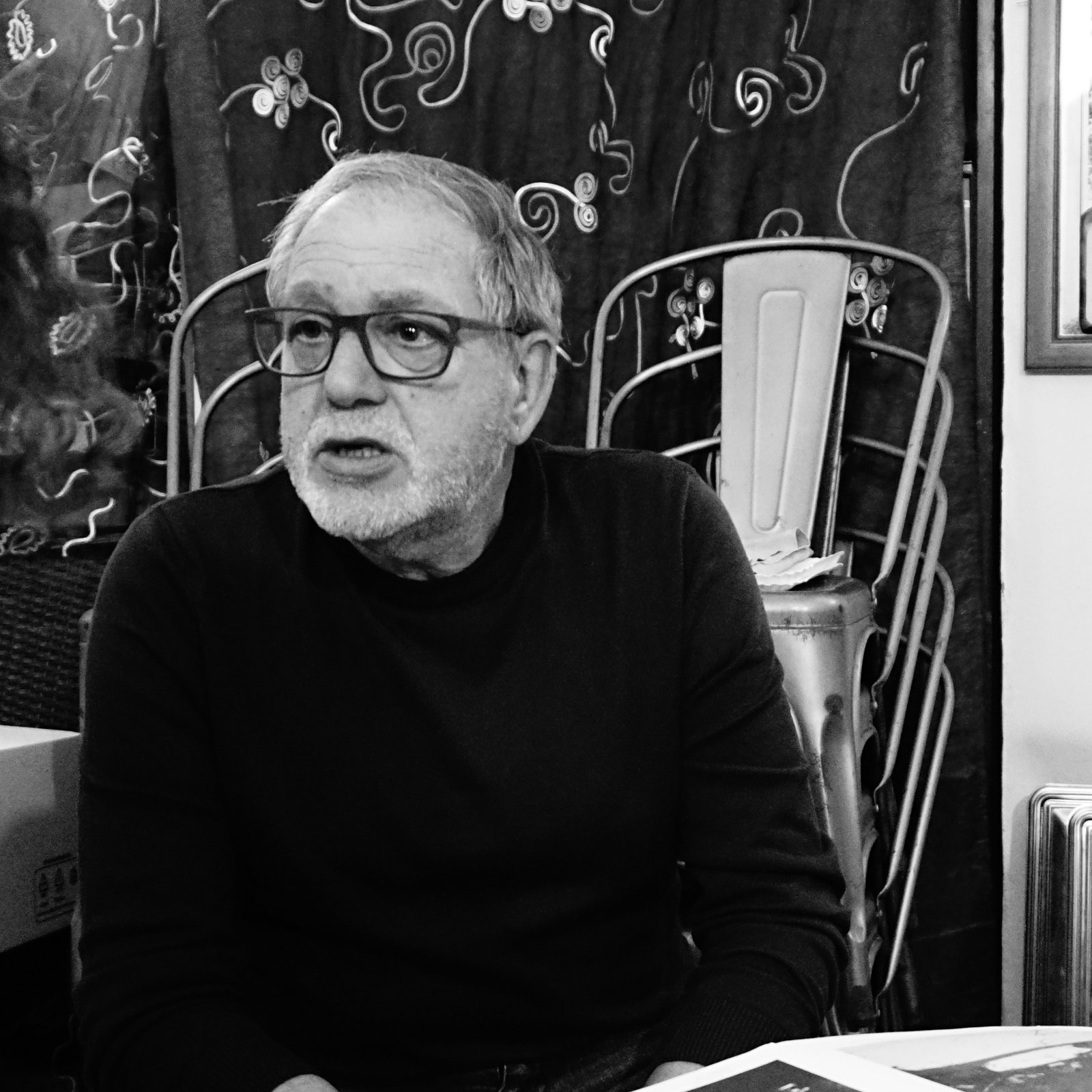
Interviewee: Pelle Carlo
Interviewer: Orecchia Donatella Morganti Arianna Tatò Carla
Orecchia Donatella Morganti Arianna
14 April 2024 – Bar Pelle, Genazzano (RM)
Late 1970s – Early 1980s
Keywords
- Abramović Marina
- Benjamin Walter
- Bennink Ham
- Branciaroli Franco
- Brega Piero
- Bussotti Sylvano
- Casamonica Enrico, detto “Ringo”
- Celant Germano
- Cinque Luigi
- Colombo Eugenio
- Conti Bicocchi Maria Gloria
- Coudray Michelle
- Cutarelli Dino
- de Sade Donatien-Alphonse-François
- Fabro Luciano
- Filippini Enrico
- Geremia Renato
- Géricault Théodore
- Gianelli Ida
- Kounellis Jannis
- Lerici Roberto
- Lessing Gotthold Ephraim
- Marini Giovanna
- Mengelberg Misha
- Michetti Ulderigo
- Neumann Andrés
- Panepuccia Cesare
- Paolini Giulio
- Pellion Paolo
- Petroselli Luigi
- Piperno Giacomo
- Poe Amos
- Prasca Giuliano
- Proietti Gigi
- Quartucci Carlo
- Quartucci Toto
- Scalchi Ada
- Tatò Carla
- Didone by Lerici Roberto (directed byQuartucci Carlo)
- Genealogia by Fabro Luciano
- Uscite by Kounellis Jannis and Quartucci Carlo
- Castello Colonna, Genazzano (RM)
- Genazzano (RM)
- Ninfeo del Bramante, Genazzano (RM)
- Piazza Senile, Genazzano (RM)
| 00:00:00 – 00:03:06
Biographical profile and early perceptions of the local community. |
Preliminary introductions.
D.O. Donatella Orecchia asks Carlo Pelle to situate himself biographically at the time of Genazzano Project. C.P. Carlo Pelle explains that he was about twenty years old and belonged to a family that had owned a local bar for approximately a century. He recalls the daily presence of Carlo Quartucci, Carla Tatò, and their collaborators at the family bar, particularly the breakfasts shared with what he describes as “eccentric characters”. He also mentions the nearby Bar Gemelli, which operated during the same period but has since closed. Regarding the community’s response, the witness describes it as generally positive, while emphasizing the cultural distance of a small town unaccustomed to artistic forms perceived as unconventional. |
|
| 00:03:07 – 00:06:19
Collective perception and the temporary transformation of urban space. |
D.O. Donatella Orecchia shows several photographs to stimulate the witness’s recollections.
C.P. Carlo Pelle recalls the restoration of the Ninfeo del Bramante, which was refurbished and made accessible during the project, and highlights the presence of numerous visitors from outside the local community. Asked by Donatella Orecchia whether the artistic language was readily understandable, Pelle acknowledges a degree of incomprehension, while emphasizing the strong visual impact of the stage designs and lighting. Although his memories of the individual performances are fragmentary, he vividly remembers the figures of Carlo Quartucci and Carla Tatò and their constant dialogue. He describes the town as exceptionally crowded, almost “congested”. C.T. Carla Tatò intervenes to stress the international dimension of the project, which attracted participants not only from Rome but also from abroad, and recalls the involvement of local infrastructures, including accommodation facilities, restaurants, and cafés. C.P. He adds a memory from 1981 concerning the relocation of the Pelle family’s ice cream counter and the removal of the billiard table, recalling how everyday commercial spaces were temporarily transformed during the project. |
|
| 00:06:20 – 00:08:34
Castello Colonna: from recreational space to cultural venue. |
D.O. Donatella Orecchia asks Carlo Pelle to describe Castello Colonna before and after the arrival of Carlo Quartucci and Carla Tatò.
C.P. The witness recalls that the castle had previously functioned mainly as a place where local children played. With the beginning of Genazzano Project, it was progressively restored and transformed into a venue for exhibitions and performances, becoming an active and continuously inhabited cultural space. |
|
| 00:08:35 – 00:11:11
Urban transformation and the perception of a historical break. |
D.O. Donatella Orecchia invites the witness to identify an image that best represents the period.
C.P. Carlo Pelle recalls the fountain near Castello Colonna, associating it with the presence of Carlo Quartucci and Carla Tatò. Asked about the period following their departure, he emphasizes the clear perception of change: the early 1980s are remembered as years of remarkable cultural vitality, followed by a gradual decline in activity. He refers to the role of the municipal administration, particularly Councillor for Culture Dino Cutarelli, recalling those years as the period of greatest public attendance. |
|
| 00:11:12 – 00:16:08
Economic impact and the commercial dimension. |
D.O. Donatella Orecchia asks whether Genazzano Project represented an economic resource for local businesses.
C.P. The witness explains that the project brought additional visitors to a town that already attracted people because of its established gastronomic traditions. He recalls several long-standing local restaurants (Rossi, Terremoto – run by the well-known Mario – Palumbo, and Nicolina) and emphasizes that the area’s culinary culture already constituted a significant attraction before the arrival of the project.
|
|
| 00:16:09 – 00:19:01
Peasant culture and the transmission of knowledge. |
C.T. Carla Tatò emphasizes the central role of peasant culture in rooting the project within the local context, highlighting the widespread transmission of practical knowledge. She also recalls the group’s first stay in Genazzano, focusing on the hospitality they received and their encounters with local residents.
C.P. Carlo Pelle confirms the importance of Agostino Lucci, associated with the local cooperative winery (Cantina Sociale), as an expert on the area’s wine-growing traditions. C.T. She recalls learning traditional techniques of wine grafting. C.P. He concludes by emphasizing the symbolic and cultural significance of the figure of the peasant within the local community. |
|
| 00:19:02 – 00:23:11
Memories of Uscite and spaces of social life. |
C.T. Carla Tatò shows photographs related to Uscite, including Jannis Kounellis’s glass curtain and the pyramid of wine bottles.
C.P. Carlo Pelle states that his memories are rather vague, but recalls that his family’s wine production came to an end around the time the Cantina Sociale opened in the 1970s. C.T. She remembers the cooperative winery as an important place of collective gathering upon returning from artistic travels. |
|
| 00:23:12 – 00:25:15
Fragments of visual memory of the performative actions. |
D.O. Donatella Orecchia shows a photograph of the billiard table in relation to Didone.
C.T. Carla Tatò describes the organization of the performance space within Castello Colonna. C.P. Carlo Pelle recognizes a number of isolated images, including Jannis Kounellis’s glass curtain. C.T. She then shows a photograph of Piazza del Senile. C.P. He recalls the presence of a wall inscription, referring to Lawrence Weiner’s intervention. |
|
| 00:25:16 – 00:27:43
The relationship between Genazzano Project and the local community. |
D.O. Donatella Orecchia returns to the question of how local residents received the project.
C.P. Carlo Pelle emphasizes the cultural distance between the project and a population largely unfamiliar with contemporary artistic practices. Asked whether the artists became integrated into the local community or remained outsiders, he suggests that some inhabitants may indeed have perceived them as outsiders, reflecting a cultural gap between the project and more familiar forms of local social life. |
|
| 00:27:44 – 00:29:44
Responses to radical performative practices. |
A.M. rianna Morganti recalls Hermann Nitsch’s performance.
C.P. Carlo Pelle remembers the action that took place in Piazza del Senile, describing both his own reaction and that of his peers as one of initial surprise rather than genuine shock. C.T. Carla Tatò intervenes to clarify the ritual and theatrical meaning of the performance. |
|
| 00:29:45 – 00:34:21
Selective memory and local communications systems. |
A.M. Arianna Morganti asks whether the witness remembers Luciano Fabro’s action Genealogia.
C.P. Carlo Pelle recalls the loudspeaker system used for public announcements throughout the town but does not specifically remember Fabro’s action. C.T. Carla Tatò presents additional photographs documenting the local context during Genazzano Project. |
|
| 00:34:22 – 00:38:45
Public events and the perception of Genazzano Project as a festive occasion. |
A.M. Arianna Morganti recalls Enrico Berlinguer’s visit to Genazzano.
C.P. Carlo Pelle confirms remembering the event, which took place in 1983, emphasizing the exceptionally large crowds it attracted. C.T. Carla Tatò recalls the route connecting Castello Colonna to the Ninfeo del Bramante. C.P. He concludes by describing Genazzano Project as a period associated with positive memories and a distinctly festive atmosphere. End of interview. |
|
Interview Duration: 01:00:00 approximately
Registration Duration: 00:38:45
Format: M4A
Type: Audio
Language: Italian
Subjects:
Original Document Placement:
- Museo Biblioteca dell’Attore
- ICBSA, Via Caetani 32, 00186, Roma
Usage and Rights:
Any use of the material different from listening (except short quotation) is not possible without the prior written consent of ECAD/ORMETE.
Interviews may only be reproduced with permission by ORMETE
Citation
Interview with Pelle Carlo, conducted by Donatella Orecchia and Arianna Morganti, at Bar Pelle, Genazzano, Rome, on 14 April 2024, “Progetto Genazzano (1981–1984)”, Ormete Collection (ORMT-18o), consulted in URL:<https://patrimoniorale.ormete.net/interview/interview-with-pelle-carlo/>, (access date).
Relation: Bibliography: