
Interview with Cinque Luigi
ORMT-18n
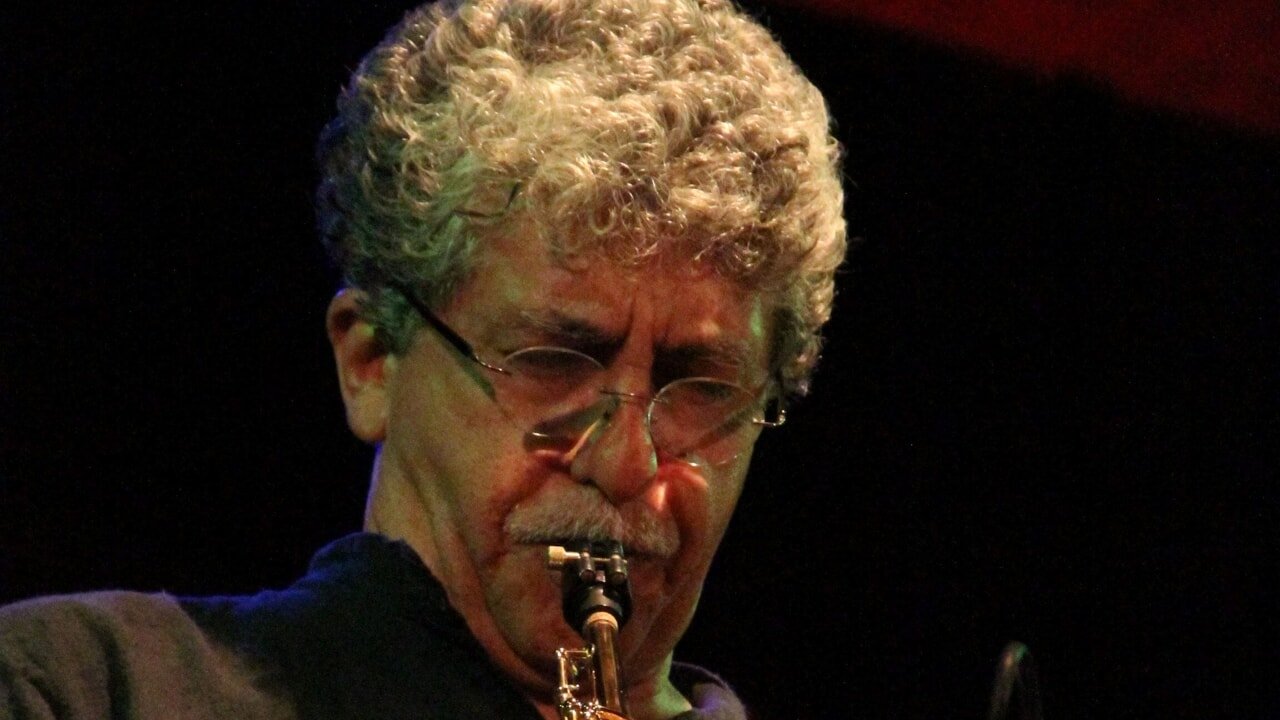
Interviewee: Cinque Luigi
Interviewer: Orecchia Donatella Morganti Arianna
Orecchia Donatella Morganti Arianna
9 April 2024 – Luigi Cinque’s studio, Roma
Late 1970s – Early 1980s
Keywords
- Abramović Marina
- Battistelli Giorgio
- Bene Carmelo
- Benjamin Walter
- Bennink Ham
- Branciaroli Franco
- Brega Piero
- Bussotti Sylvano
- Casamonica Enrico, detto “Ringo”
- Celant Germano
- Cinque Luigi
- Colombo Eugenio
- Conti Bicocchi Maria Gloria
- Coudray Michelle
- Curran Alvin
- Cutarelli Dino
- de Sade Donatien-Alphonse-François
- Fabro Luciano
- Filippini Enrico
- Geremia Renato
- Géricault Théodore
- Gianelli Ida
- Ibsen Henrik
- Kounellis Jannis
- Lerici Roberto
- Lessing Gotthold Ephraim
- Marini Giovanna
- Mengelberg Misha
- Michetti Ulderigo
- Morricone Ennio
- Neri Antonello
- Neumann Andrés
- Panepuccia Cesare
- Paolini Giulio
- Pellion Paolo
- Petroselli Luigi
- Piperno Elsa
- Piperno Giacomo
- Poe Amos
- Prasca Giuliano
- Proietti Gigi
- Quartucci Carlo
- Quartucci Toto
- Scalchi Ada
- Schiaffini Giancarlo
- Tatò Carla
- Didone by Quartucci Carlo and Kounellis Jannis
- Funerale by Quartucci Carlo and Lerici Roberto
- Genealogia by Fabro Luciano
- Il fuoco che genera fumo, fumo che genera ballerina, ballerina che genera galli by Quartucci Carlo, Kounellis Jannis, Paolini Giulio and Tatò Carla
- Uscite by Kounellis Jannis and Quartucci Carlo
- Anzio
- Castello Colonna, Genazzano (RM)
- Erice
- Genazzano (RM)
- Ninfeo del Bramante, Genazzano (RM)
- Piazza Senile, Genazzano (RM)
- Teatro Malibran, Venezia
- Beat 72
- Canzoniere del Lazio
- Gruppo MEV
- Gruppo 63
- Zattera di Babele
| DESCRIPTION | ||
| 00:00:00 – 00:13:25
The Canzoniere del Lazio and the first meeting with Carlo Quartucci and Carla Tatò. |
D.O. Donatella Orecchia invites Luigi Cinque to recall his first encounter with Carlo Quartucci and Carla Tatò, prior to the beginning of Genazzano Project.
L.C. Luigi Cinque reconstructs his experience within the Canzoniere del Lazio (1973–1976), emphasizing its innovative role in reworking peasant musical traditions through urban and contemporary languages, also engaging with models drawn from U.S. musical culture. He recalls how the group was among the first to experiment with this approach, quickly becoming a point of reference within the Italian cultural landscape. He situates this experience within what some scholars, including Alessandro Portelli, have defined as the phase of the “entry of the barbarians”, reflecting critically on practices of documenting oral tradition and observing how every field recording inevitably entails a transformation of the material collected. He also recalls the progressive decline of peasant culture, interpreting it as the result of a process of marginalization fostered in part by the centrality assumed by workerism within the political culture of the Italian Left. Luigi Cinque recalls that Carlo Quartucci was already a widely known figure within Rome’s cultural milieu. In his view, 1970s Rome was characterized by two fundamental conditions: on the one hand, an extraordinary cultural openness, at a historical moment when the highest degree of technological development still coexisted with a strong plurality of cultures and languages; on the other, the city’s role as an international centre for contemporary artistic production, particularly in the field of music. Finally, he situates his own trajectory within research into contemporary music, oriented towards the deconstruction of traditional forms, the centrality of the sonic body, and the overcoming of conventional harmonic models. From this perspective, the Canzoniere del Lazio identified a different form of cultural and political engagement, based on the recovery of Mediterranean popular traditions, situated outside both ecclesiastical and academic culture. According to Luigi Cinque, it was precisely this research that aroused Carlo Quartucci’s interest. |
|
| 00:13:26 – 00:18:32
From the Canzoniere del Lazio to Borgatacamion: the first meeting with Carlo Quartucci. |
L.C. Luigi Cinque recalls the invitation he received from Carlo Quartucci to participate, together with the Canzoniere del Lazio, in the Borgatacamion experience. Although he remembers the working atmosphere positively, he emphasizes the intensity of the rehearsal process and identifies this experience as his first sustained engagement with Quartucci’s theatrical research.
The collaboration marks, for the witness, the beginning of a new artistic phase in which music acquires an autonomous scenic dimension, emancipating itself from the conventions of traditional theatre. In this context, Cinque contrasts Quartucci’s approach with the self-referential character that, in his view, marked part of the Italian avant-garde theatre of the period, with the exception of Carmelo Bene. He also recalls the presence of musicians such as Misha Mengelberg, Giancarlo Schiaffini, Giovanna Marini, and Han Bennink, noting how the conclusion of the Canzoniere del Lazio experience coincided with the beginning of his collaboration with the Zattera di Babele. He describes Genazzano Project as an important opportunity for technical, linguistic, and artistic learning. |
|
| 00:18:33 – 00:26:49
Carlo Quartucci, Carla Tatò, Jannis Kounellis and Genazzano Project. |
L.C. Luigi Cinque recalls the close collaboration between Carlo Quartucci and Jannis Kounellis, describing the latter as a figure of exceptional artistic intelligence, and emphasizes the central role played by Carla Tatò within the project.
He highlights Quartucci’s ability to bring together artists from different disciplines and describes the progressive development of Carla Tatò’s vocal and performative research as an autonomous and original trajectory. He situates this experience within the profound artistic transformations of the period, recalling how, in the musical field as well, the institutional role of the singer was being called into question. Overall, he defines Genazzano Project as a veritable school of artistic training. |
|
| 00:26:50 – 00:31:57
The stay in Genazzano and the workshop-style dimension of Genazzano Project. |
D.O. Donatella Orecchia asks Luigi Cinque how long he stayed in Genazzano and how the work was structured during the project.
L.C. Luigi Cinque recalls an intermittent yet extended presence, alternating between periods of several days spent in Genazzano, rehearsals, and preparation for activities. He describes this working method as one of the conditions that made possible the construction of what he calls a “dramaturgy of the arts”. He considers Carlo Quartucci and Carla Tatò to have anticipated interdisciplinary artistic practices and situates Genazzano Project within a broader process of the international opening of Italian culture. He defines Genazzano as the first major experiment in the interdisciplinary concentration of the arts, an experience that would subsequently find further development in Erice, while recognizing the project’s geographical proximity to Rome as one of the distinctive features of the Genazzano experience. |
|
| 00:31:58 – 00:46:19
The impact of Genazzano Project on Luigi Cinque’s artistic and personal trajectory. |
D.O. Donatella Orecchia recalls the collaboration between Carlo Quartucci and Jannis Kounellis, referring to the succession of the opening prologue Il fuoco che genera fumo. Il fumo che genera ballerina. La ballerina che genera galli and Didone, performed by Carla Tatò, and asks Luigi Cinque what impact it had on him to work within a project jointly conceived by Quartucci, Kounellis, and Tatò.
L.C. Luigi Cinque describes that period as an experience lived with spontaneity and lightness, recalling the atmosphere of intense experimentation that characterized the group. He returns to the relationship between Quartucci and Kounellis, emphasizing their artistic complementarity and mutual creative need. He also recalls Uscite, highlighting Kounellis’s interventions in the material aspects of the stage through devices such as the curtain made of glasses. Reflecting on Carla Tatò’s artistic trajectory, he observes how the actress progressively developed an autonomous artistic language, emancipating herself from dynamics of male subordination. D.O. Donatella Orecchia observes that Carla Tatò herself subsequently interpreted that period as a phase of personal and artistic emancipation. L.C. Luigi Cinque concludes by recalling an anecdote connected to a performance of Henrik Ibsen’s Nora Helmer in Anzio, performed by Carla Tatò together with Piero Brega. |
|
| 00:46:20 – 00:52:00
Carla Tatò’s vocal research. |
D.O. Donatella Orecchia recalls Carla Tatò’s artistic trajectory, from the Nora Helmer of the Camion experience to the Didone of Genazzano Project, asking how musicians perceived the development of her vocal research.
L.C. Luigi Cinque situates Carla Tatò’s work within a broader period of experimentation with female vocality. He observes how the actress, initially still conditioned by pre-existing interpretive models, progressively developed an autonomous performative language. He identifies Genazzano Project, her collaboration with Carlo Quartucci, and the experience of the Zattera di Babele as the context that fostered this process of artistic and personal maturation. |
|
| 00:52:01 – 00:57:55
The fragment as a compositional principle and Didone. |
L.C. Luigi Cinque reflects on the role of the fragment as an operative principle in Carlo Quartucci’s artistic research, recognizing its influence also on contemporary music practices. He attributes this approach to Quartucci’s engagement with authors and intellectuals who contributed to shaping his research.
He also recalls Roberto Lerici, describing him as a fundamental presence within Genazzano Project and situating him within the Roman cultural context of the period, alongside other experiences such as Gruppo 63 and the collaboration with Jannis Kounellis. Focusing on Didone, he describes the work as an experience of strong visual impact, characterized by the sensation of acting within a painting. He recalls the collaborative improvisational work with Eugenio Colombo, Giancarlo Schiaffini, and Massimo Coen, based on their different experiences in the field of contemporary music. He also recalls his own experience in the improvisation group at Beat 72, mentioning the presence of Giorgio Battistelli and describing Rome at the time as a particularly fertile context for artistic experimentation. He concludes by returning to Didone, emphasizing the centrality of Carla Tatò’s stage presence within the composition. |
|
| 00:57:56 – 01:03:21
The reception of Genazzano Project and a reflection on the concept of the avant-garde |
D.O. Donatella Orecchia asks Luigi Cinque what he considers to have been the audience’s response to Genazzano Project.
L.C. Luigi Cinque recalls a generally silent participation on the part of the peasant community of Genazzano, perceived as less receptive than in other contexts, such as Erice. He attributes this difficulty in part to the absence of forms of mediation and audience preparation, distinguishing the response of local inhabitants from that of spectators coming from outside the area. Starting from this consideration, he develops a reflection on the historical meaning of the avant-garde, situating it within the Italian political and cultural context of the 1970s. He recalls the progressive abandonment of the idea of the avant-garde as a cultural and political guide, relating this shift to the transformation of other paradigms of modernity, including the notion of progress. |
|
| 01:03:22 – 01:05:56
The relationship between Genazzano Project and the local community. |
D.O. Donatella Orecchia recalls Carlo Quartucci and Carla Tatò’s attempt to establish a dialogue with the peasant culture of Genazzano, referring to their use of materials originating from the local area, the artists’ continuous presence in the town, and their direct relationship with the local community. She therefore asks Luigi Cinque to elaborate on his perspective, which appears more oriented towards highlighting elements of discontinuity.
L.C. Luigi Cinque interprets Genazzano Project as an expression of a utopia characteristic of his generation, developing a critical reflection on the cultural and political expectations that emerged during those years and on their subsequent decline. |
|
| 01:05:57 – 01:11:58
The Drammaturgia delle Arti and the legacy of Carlo Quartucci and Carla Tatò. |
L.C. Luigi Cinque recalls the collaboration between Carlo Quartucci and Rudi Fuchs, focusing on the thirty-two-hour concert, initially conceived as an uninterrupted eighty-hour action. He describes the scenic device as a habitable environment, furnished with beds, bedside tables, a kitchen, and an elaborate sound system constructed through everyday objects such as alarm clocks and amplified sinks.
In the course of his reflection, he also addresses the issue of public funding for cultural projects, highlighting its political limitations. He attributes the principal value of Genazzano Project and, more broadly, of Carlo Quartucci and Carla Tatò’s work to their ability to pursue a radical and visionary artistic research that went on to train numerous artists of subsequent generations. He also recalls Elsa Piperno. He concludes by identifying the Drammaturgia delle Arti as one of the foundational principles of his own artistic trajectory, stating that this elaboration would have been difficult to achieve without the experience shared with Quartucci and Tatò. |
|
| 01:11:59 – 01:17:52
Castello Colonna as a spatial device |
D.O. Donatella Orecchia returns to the subject of the Castello Colonna, asking what significance it had for Luigi Cinque to work within a space scenically reconfigured by Jannis Kounellis according to the principles of the Drammaturgia delle Arti.
L.C. Luigi Cinque describes the Castello Colonna as a space of extraordinary architectural quality, capable of fostering processes of knowledge and exchange among artists. He emphasizes how this context also produced a condition of relative separation from the everyday life of the town. He further observes that Carlo Quartucci and Carla Tatò’s research was not aimed at directly representing the specific characteristics of the local reality, but rather at constructing a protected space for artistic experimentation. He refers in particular to the Sala Martino V and its elevated stage, defining them as the neutral space within which a utopian dimension could be made practicable. |
|
| 01:17:53 – 01:21:58
Funerale between Venice and Jannis Kounellis’ scenic intuition. |
L.C. Luigi Cinque recalls the production history of Funerale, specifying that he did not attend its first realization in Kassel but rather the subsequent performance at the Teatro Malibran in Venice. He recalls an episode connected with the staging, when permission was initially denied for the carriage and horses to enter because their weight was considered excessive for the stage. He then recalls Jannis Kounellis’s intuition: he identified and had old wooden beams retrieved in order to reinforce the stage structure, interpreting this solution as evidence of the artist’s extraordinary inventiveness. | |
| 01:21:59 – 01:27:34
Further reflections on the artistic partnership between Carlo Quartucci and Jannis Kounellis. |
L.C. Luigi Cinque concludes by returning to the artistic collaboration between Carlo Quartucci and Jannis Kounellis, recalling, among the most significant examples of their shared research, the Antigone experience realized at Segesta.
Conclusion. Final thanks and farewells. |
|
Interview Duration: 03:00:00 approximately
Registration Duration: 01:38:17 (01:27:36)
Format: mp3
Type: Audio
Language: Italiano
Subjects:
Original Document Placement:
- ICBSA, Via Caetani 32, 00186, Roma
- Museo Biblioteca dell’Attore
Usage and Rights:
Any use of the material different from listening (except short quotation) is not possible without the prior written consent of ECAD/ORMETE.
Interviews may only be reproduced with permission by ORMETE
Citation
Interview with Cinque Luigi, conducted by Donatella Orecchia and Arianna Morganti, at Luigi Cinque’s studio, Rome, on 9 April 2024, “Progetto Genazzano (1981–1984)”, Ormete Collection (ORMT-18n), consulted in URL:< https://patrimoniorale.ormete.net/en/interview/interview-with-cinque-luigi/ >, (access date).
Relation: Bibliography: