
Interview with Moroncelli Alfredo and Ricci Mario
ORMT-18y
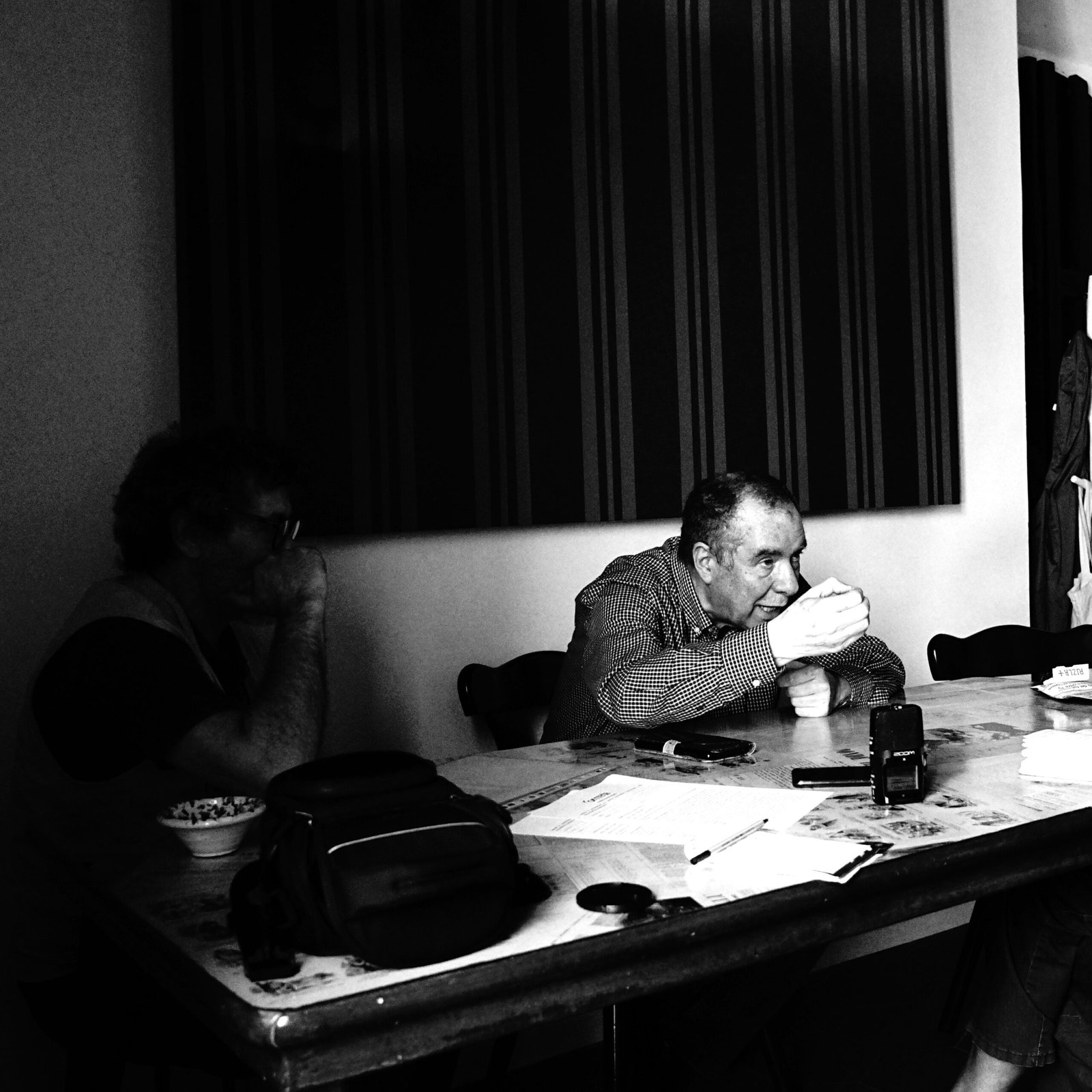
Interviewee: Moroncelli Alfredo Ricci Mario
Interviewer: Orecchia Donatella Morganti Arianna
Orecchia Donatella Morganti Arianna
8 June 2026 – Mario Ricci, Genazzano (RM)
Late 1970s – Early 1980s
Keywords
- Abramović Marina
- Benjamin Walter
- Bennink Ham
- Berlinguer Enrico
- Beuys Joseph
- Bonito Oliva Achille
- Branciaroli Franco
- Brega Piero
- Buren Daniel
- Bussotti Sylvano
- Celant Germano
- Cinque Luigi
- Colombo Eugenio
- Conti Bicocchi Maria Gloria
- Coudray Michelle
- Cutarelli Dino
- de Sade Donatien-Alphonse-François
- Fabro Luciano
- Filippini Enrico
- Geremia Renato
- Géricault Théodore
- Gianelli Ida
- Kounellis Jannis
- Lerici Roberto
- Lessing Gotthold Ephraim
- Marini Giovanna
- Mengelberg Misha
- Michetti Ulderigo
- Neumann Andrés
- Nitsch Hermann
- Panepuccia Cesare
- Paolini Giulio
- Pellion Paolo
- Petroselli Luigi
- Piperno Giacomo
- Poe Amos
- Prasca Giuliano
- Proietti Gigi
- Quartucci Carlo
- Quartucci Toto
- Scalchi Ada
- Tatò Antonio
- Tatò Carla
- Ulay
- Funerale by Lerici Roberto and Kounellis Jannis (directed by Quartucci Carlo)
- Il fuoco che genera fumo. Il fumo che genera ballerina. Ballerina che genera galli by Kounellis Jannis
- Platea by Paolini Giulio and Quartucci Carlo
- Prologo by Paolini Giulio
- Uscite by Kounellis Jannis and Quartucci Carlo
- Castello Colonna, Genazzano (RM)
- Genazzano (RM)
- Museum Fridericianum, Kassel
- Ninfeo del Bramante, Genazzano (RM)
- Piazza Senile, Genazzano (RM)
| DESCRIPTION | ||
| 00:00:00 – 00:10:22
Genazzano between popular culture, the acquisition of Castello Colonna, and the birth of Genazzano Project. |
Preliminary introductions.
D.O. Donatella Orecchia invites Alfredo Moroncelli to resume his account of Genazzano Project, which had begun before the recording started. AL.MO. Alfredo Moroncelli situates the experience of Genazzano Project within the context of the Municipality of Genazzano’s acquisition of Castello Colonna in 1979. He recalls the site inspection carried out in July of that year by Mayor Ulderigo Michetti, Councillor for Culture Dino Cutarelli, and Achille Bonito Oliva, who had been invited to design an inaugural exhibition for the newly acquired castle. For Moroncelli, the exhibition Le stanze represented a genuine revelation: the castle, until then experienced only from the outside because of its state of disrepair, suddenly appeared as a space to be rediscovered and inhabited. Moroncelli also reconstructs the cultural climate of the period, marked by the debate between Arte Povera and the Transavanguardia, recalling the presence of artists such as Jannis Kounellis and Marisa Merz. At the time, he was twenty-one years old and active as a political organiser and CGIL official. He describes Genazzano as a community deeply rooted in popular culture, characterised by the encounter between the working-class and peasant worlds: Mayor Michetti came from the experience of Rome’s tram workers, while the establishment of the cantina sociale represented one of the principal forms of gathering for the agricultural community. It was within this context that Carlo Quartucci, Carla Tatò, and the experience of Genazzano Project subsequently became involved |
|
| 00:10:23 – 00:21:28
The cultural and political debate in 1980s Genazzano. |
D.O. Donatella Orecchia asks what relationship existed between the experience inaugurated by Le stanze and the subsequent arrival of Carlo Quartucci and Carla Tatò.
AL.MO. Alfredo Moroncelli reflects on the different cultural perspectives that shaped the artistic debate of the period. He recalls the role of Achille Bonito Oliva and the cultural climate surrounding the emergence of the Transavanguardia, contrasting it with the collective and relational dimension developed by Carlo Quartucci and Carla Tatò’s La Zattera di Babele. The reflection extends to the relationship between theatre, literature, and the visual arts. Moroncelli also recalls meeting some of the major figures in contemporary culture who were present in Genazzano, including Giulio Paolini, Jannis Kounellis, Luciano Fabro, Germano Celant, and Rudi Fuchs. In his view, one of the most significant aspects of the Genazzano experience was the possibility of encountering different cultural orientations simultaneously, coexisting within the same territorial context. He further recalls the activities of Sylvano Bussotti, whose presence contributed to broadening the range of artistic experiences hosted in Genazzano. |
|
| 00:21:29 – 00:25:50
Zattera di Babele and the debate on postmodernism. |
D.O. Donatella Orecchia asks the witnesses whether the experience of Zattera di Babele can be interpreted as a manifestation of postmodern culture.
M.R. Mario Ricci responds by recalling the climate surrounding the staging of Le stanze. He recounts an episode involving Jannis Kounellis, who expressed doubts about the continued presence of his work within the exhibition. For Ricci, this episode reveals some of the tensions underlying the artistic debate of the period. He also emphasises the difference between the approach of the exhibition curated by Achille Bonito Oliva, which focused on the spaces of Castello Colonna, and the logic of Zattera di Babele, which instead sought to extend the artistic experience throughout the urban fabric. AL.MO. Alfredo Moroncelli broadens the reflection by addressing the theme of the image and transformations in contemporary art, referring in particular to the works and artistic approaches of Jannis Kounellis and Giulio Paolini. |
|
| 00:25:51 – 00:33:55
Image, territory, and dispersed artistic practices. |
D.O. Donatella Orecchia develops the theme of the image, recalling Carlo Quartucci’s work, his dialogue with Jannis Kounellis, and the role of language entrusted to Carla Tatò’s stage presence. She also refers to Uscite, focusing on Kounellis’s curtain made of glasses and on the use of bottles originating from local wine production.
M.R. Mario Ricci connects these experiences to earlier cultural initiatives held in Genazzano, recalling the Premio Genazzano. AL.MO. Alfredo Moroncelli broadens the discussion by tracing aspects of the history of local figurative culture and recalling the establishment of the town’s art gallery in the 1950s, thereby situating Genazzano Project within a broader history of relationships between art and territory. |
|
| 00:33:56 – 00:40:47
Recollections of Carlo Quartucci and Carla Tatò’s arrival in Genazzano. |
D.O. Donatella Orecchia invites the witnesses to recall the moment when Carlo Quartucci and Carla Tatò arrived in Genazzano.
AL.MO. Alfredo Moroncelli recalls the strong impact made by Carla Tatò’s presence, immediately associating her figure with his memory of that period. M.R. Mario Ricci recalls his involvement in Luciano Fabro’s Genealogia project. AL.MO. Moroncelli describes Genealogia as an action that began with the public reading of the population registers through the town’s loudspeakers. In his view, the project helped to make the social and familial structure of the Genazzano community visible, transforming the civil registry into a form of collective representation of local memory. |
|
| 00:40:48 – 00:43:24
Mario Ricci’s memories of Le stanze and Zattera di Babele. |
D.O. Donatella Orecchia asks Mario Ricci about his first memory of the experience of Genazzano Project.
M.R. Mario Ricci recalls attending art school during the installation of Le stanze. His first encounter with the exhibition was characterised by the juxtaposition of painting and installations made using objects and materials. He emphasises that the exhibition was concentrated within the spaces of Castello Colonna, whereas the initiatives of Zattera di Babele gradually extended throughout the town, transforming Genazzano into a dispersed artistic space. He also recalls works and interventions by artists such as Jannis Kounellis and Giulio Paolini. AL.MO. Alfredo Moroncelli also recalls the interventions of Lawrence Weiner and the signage created by Daniel Buren. |
|
| 00:43:25 – 00:49:01
Documenta 7 and the Genazzano delegation in Kassel. |
M.R. Mario Ricci recalls his involvement in the experience of Documenta 7 in Kassel.
AL.MO. Alfredo Moroncelli retraces some moments of the stay in Germany, evoking the Museum Fridericianum, Carla Tatò’s performative actions, and visits to exhibition spaces together with the artists involved in the project. He particularly recalls a morning spent with Giulio Paolini inside the theatre in Kassel, an experience he considers particularly significant for his cultural formation. |
|
| 00:49:02 – 00:56:10
Documenta 7: from the local context to the international scene. |
D.O. Donatella Orecchia invites the witnesses to reflect on the relationship between the experiences developed in Genazzano and their subsequent presentation in an international context such as Documenta 7.
M.R. Mario Ricci recalls the strong impact of encountering in Kassel artistic practices and works that had originated within the context of Genazzano Project. A.M. Arianna Morganti asks what role the witnesses played during their stay in Germany. AL. MO. Alfredo Moroncelli explains that the delegation included figures with different functions: Mario Ricci participated as an enthusiastic observer and a constant presence throughout the activities, while he himself represented the political and institutional dimension of the municipal administration. |
|
| 00:56:11 – 01:03:46
Artworks between Genazzano and Kassel: continuities and transformations. |
D.O. Donatella Orecchia asks what significance was attached to witnessing the international presentation of works and practices developed in Genazzano, questioning whether the prevailing perception was one of international recognition or of decontextualisation.
M.R. Mario Ricci recalls numerous installations by the artists involved in the project: Jannis Kounellis’s work featuring the gilded wall, the coat rack, and the hat; interventions by Daniel Buren; and the exhibition curated by Rudi Fuchs. He retains less distinct memories of the theatrical component. AL.MO. Alfredo Moroncelli shifts the focus to an episode that took place in Genazzano, recalling the performance by Marina Abramović and Ulay devoted to the light of dawn. At the end of the action, artists and local residents gathered together in the small square, an indication of the sense of familiarity that had developed over the years of the project. M.R. Returning to Documenta 7, he recalls Joseph Beuys’s installation composed of thousands of stones, emphasising its strong visual and material impact. AL.MO. Alfredo Moroncelli recalls that the area where Beuys’s intervention took place had previously been the site of an attack, an element that contributed to the work’s symbolic complexity. M.R. The experience gained in Genazzano had provided him with tools for interpreting artworks through their material and symbolic dimensions, developing a particular sensitivity to the language of matter, lightness, and weight. |
|
| 01:03:47 – 01:13:13
Reception, disorientation, and participation: the community’s response. |
D.O. Donatella Orecchia asks how the inhabitants of Genazzano experienced Genazzano Project.
M.R. Mario Ricci recalls an initial phase characterised by surprise and incomprehension in response to the artistic practices being proposed. AL.MO. Alfredo Moroncelli, by contrast, emphasises the openness and hospitality shown by the inhabitants, particularly recalling the widespread participation in the artistic interventions disseminated throughout the town. D.O. Asks for further details about the work carried out with Lawrence Weiner. AL.MO. Alfredo Moroncelli describes the project as one of the most significant experiences of civic participation. Weiner’s writings and interventions entered homes and everyday spaces, fostering direct relationships between artists and residents. He also recalls the role played by Carla Tatò in promoting this form of interaction. M.R. Refers to Hermann Nitsch’s action, observing that the local rural culture was already accustomed to witnessing ritual practices associated with animal slaughter. He also recalls the centrality of Piazza del Senile as a space for artistic actions. AL.MO. Interprets the experience of Genazzano Project as a process of productive disorientation, capable of transforming collective rituals and customs into new forms of cultural participation. He describes the artists’ interventions as the construction of a shared “secular ritual” and recalls Carla Tatò’s strong stage presence in the public space. |
|
| 01:13:14 – 01:21:07
Hermann Nitsch and the collective construction of the artwork. |
D.O. Donatella Orecchia asks what the community’s response was to Hermann Nitsch’s actions.
M.R. Mario Ricci interprets Nitsch’s intervention as a kind of contemporary procession, characterised by broad and widespread participation. |
|
| 01:21:08 – 01:23:53
The arrival of the “outsiders” and the opening up of the local community. |
D.O. Donatella Orecchia observes that Genazzano Project attracted numerous visitors, artists, and cultural practitioners from outside the town, asking how the inhabitants perceived this phenomenon.
AL.MO. Alfredo Moroncelli recalls a prevailing sense of enthusiasm and pride. The arrival of people from different contexts was perceived as an opportunity for openness and collective growth. Progetto Genazzano is remembered not only as an artistic phenomenon, but also as a social one, capable of connecting the local community with national and international cultural networks. |
|
| 01:23:54 – 01:29:01
The memory of Genazzano Project between public participation and everyday life. |
D.O. Donatella Orecchia asks the witnesses whether, in their view, the memory of Genazzano Project has remained alive within the community or has gradually faded.
AL.MO. Alfredo Moroncelli observes that much of the collective memory of the experience has weakened over time, despite its importance for the town. |
|
| 01:29:02 – 01:34:43
The rediscovery of the Ninfeo del Bramante and the reactivation of historic spaces. |
D.O. Donatella Orecchia asks the witnesses what memories they retain of the working practices developed between Castello Colonna and the Ninfeo del Bramante.
AL.MO. Alfredo Moroncelli recalls the state of abandonment in which the Ninfeo had fallen before the arrival of Genazzano Project. The space, little frequented and marginalised within the life of the town, was gradually reclaimed through a collective effort that also involved municipal workers engaged in cleaning and clearing the area. The experience is remembered as a process of rediscovering the site’s architecture and historical memory, subsequently returning it to the community as a cultural and performative space. |
|
| 01:34:44 – 01:45:23
The conditions that made Genazzano Project possible. |
D.O. Donatella Orecchia invites Alfredo Moroncelli to reflect on the reasons that made an experience such as Genazzano Project possible within the context of the 1980s.
AL.MO. Alfredo Moroncelli identifies the social and cultural characteristics of the local community as one of the project’s fundamental conditions. He recalls a town still strongly rooted in working-class and peasant culture, characterised by curiosity, openness to encounters, and a capacity to be surprised. Within this context, the artistic experience found fertile ground in a community still accustomed to shared storytelling, collective life, and public participation. |
|
| 01:45:24 – 01:53:56
Funerale at the Ninfeo de Bramante: remembering a landmark performance. |
D.O. Donatella Orecchia asks the witnesses what memories they retain of the performance Funerale.
M.R. Mario Ricci situates the work within a delicate phase in the experience of La Zattera di Babele, marked by growing political and institutional difficulties. He recalls how some sectors of the local context were no longer favourable to Carlo Quartucci and Carla Tatò remaining in Genazzano. Within this context, Enrico Berlinguer’s visit is interpreted as a moment of renewed momentum and support for the experience. On a visual level, Funerale remains impressed in his memory for the power of its images: a performance perceived as harsh, dominated by dark atmospheres and strong emotional intensity. |
|
| 01:53:57 – 02:03:40
The memory of Carlo Quartucci and the significance of the experience. |
D.O. Donatella Orecchia concludes the interview by asking the witnesses to recall the personal relationship they established with Carlo Quartucci.
AL.MO. Alfredo Moroncelli portrays him as a generous and approachable person, recalling not only Carlo Quartucci himself but also the relationships that developed over time with his family. The memory of the artist thus becomes intertwined with that of personal relationships that remained alive beyond the conclusion of Genazzano Project. End of interview. |
|
Interview Duration: 03:00:00 approximately
Registration Duration: 02:03:40
Format: wav
Type: Audio
Language: Italiano
Subjects:
Original Document Placement:
- ICBSA, Via Caetani 32, 00186, Roma
- Museo Biblioteca dell’Attore, Via del Seminario 10, 16121, Genova
Usage and Rights:
All audio materials on the Oral Heritage portal are the exclusive property of Ormete and the interviewee.
Any use of the material different from listening (except short quotation) is not possible without the prior written consent of ECAD/ORMETE.
Interviews may only be reproduced with permission by ORMETE
Citation
Interview with Moroncelli Alfredo and Ricci Mario, conducted by Donatella Orecchia and Arianna Morganti, Mario Ricci’s studio, Genazzano (RM), on 8 June 2025, “Progetto Genazzano (1981–1984)”, Ormete Collection (ORMT-18x), consulted in URL:< https://patrimoniorale.ormete.net/en/interview/interview-with-morocelli-alfredo-and-mario-ricci/>, (access date).
Relation: Bibliography: