
Interview with Orzilli Roberto
ORMT-18t
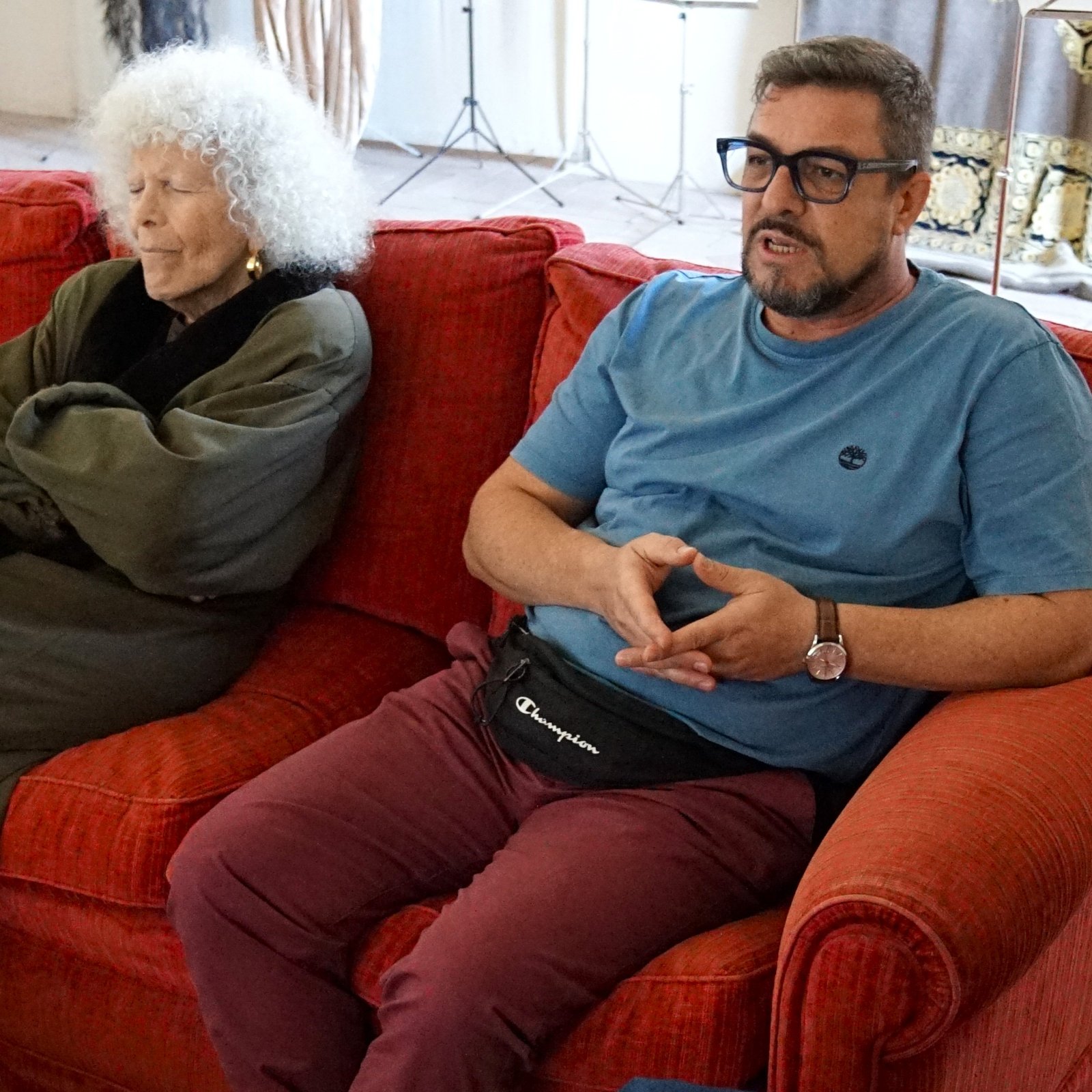
Interviewee: Orzilli Roberto
Interviewer: Orecchia Donatella Morganti Arianna
Orecchia Donatella Morganti Arianna
28 September 2024 – Castello Colonna, Genazzano (RM)
Early 1980s
Keywords
- Abramović Marina
- Benjamin Walter
- Bennink Ham
- Branciaroli Franco
- Brega Piero
- Bussotti Sylvano
- Casamonica Enrico, detto “Ringo”
- Celant Germano
- Cinque Luigi
- Colombo Eugenio
- Conti Bicocchi Maria Gloria
- Coudray Michelle
- Cutarelli Dino
- de Sade Donatien-Alphonse-François
- Fabro Luciano
- Filippini Enrico
- Geremia Renato
- Géricault Théodore
- Gianelli Ida
- Kounellis Jannis
- Lerici Roberto
- Lessing Gotthold Ephraim
- Lucci Massimiliano
- Marini Giovanna
- Mengelberg Misha
- Michetti Ulderigo
- Neumann Andrés
- Nitsch Hermann
- Panepuccia Cesare
- Paolini Giulio
- Pellion Paolo
- Petroselli Luigi
- Piperno Giacomo
- Pizzolante Marina
- Poe Amos
- Prasca Giuliano
- Proietti Gigi
- Quartucci Carlo
- Quartucci Toto
- Scalchi Ada
- Tatò Carla
- Weiner Lawrence
- Entro il regno dell’illuminazione by Weiner Lawrence
- Genealogia by Fabro Luciano
- Il fuoco che genera fumo. Il fumo che genera ballerina. Ballerina che genera galli by Kounellis Jannis
- Uscite by Kounellis Jannis and Quartucci Carlo
- Bar Gemelli, Genazzano (RM)
- Castello Colonna, Genazzano (RM)
- Genazzano (RM)
- Ninfeo del Bramante, Genazzano (RM)
- Piazza Senile, Genazzano (RM)
| 00:00:00 – 00:03:18
Early memories of Castello Colonna before the beginning of Genazzano Project. |
Preliminary introductions.
D.O. Donatella Orecchia introduces Roberto Orzilli’s testimony, noting that he was a child at the time Genazzano Project began, and invites him to recall Castello Colonna before the arrival of Carlo Quartucci and Carla Tatò. R.O. Roberto Orzilli describes the Castle as a space still marked by the aftermath of the Second World War: a partially ruined structure characterized by rubble and a completely damaged wing. Despite these conditions, the Castle functioned as a place of play, forming an integral part of everyday life and childhood imagination. |
|
| 00:03:19 – 00:09:28
The arrival of Carlo Quartucci and Carla Tatò in Genazzano and the local community’s perception. |
D.O. Donatella Orecchia invites the interviewee to recall the arrival of Carlo Quartucci and Carla Tatò and to describe the perceptual transformation of the Castle brought about by their presence.
R.O. Roberto Orzilli describes their arrival as “a bolt from the blue”, emphasizing its discontinuity with the local socio-cultural context, then characterized by an agricultural economy and everyday practices rooted in rural life. He recalls an initial distance between the artistic practices introduced by the project and the culture of the village, followed by a gradual integration of the artists into community life through their use of public spaces and direct relationships with local inhabitants. He also recalls the presence of international artists and site-specific performances distributed between Castello Colonna and the urban spaces of Genazzano, experiences that appeared “unimaginable” from the perspective of a child. Among the episodes remembered are an intervention attributable to Lawrence Weiner (text-based wall inscriptions) and an installation by Jannis Kounellis involving caged animals, later specified by Carla Tatò as rats associated with hospital beds. C.T. Carla Tatò intervenes to clarify that Lawrence Weiner’s mural inscription has been preserved thanks to Massimiliano Lucci and subsequent local conservation efforts. R.O. The witness portrays an atmosphere of intense social vitality: the project became the subject of discussion across different generations, assuming the character of a widely shared collective event. |
|
| 00:09:29 – 00:10:11
Uscite and the curtain of glasses: partial memory and testimonial mediation. |
D.O. Donatella Orecchia presents photographic documentation of Uscite and Jannis Kounellis’s curtain of hanging glasses.
R.O. Roberto Orzilli states that he retains no direct memories of these actions, explaining that his experience was limited to daytime activities, since, because of his age, he did not attend the evening performances.
C.T. Carla Tatò supplements the testimony by recalling the collection of wine bottles from the local cooperative winery, emphasizing the community’s participation in the construction of the scenic installations. |
|
| 00:10:12 – 00:13:19
The Ninfeo del Bramante and the perception of otherness. |
D.O. Donatella Orecchia introduces the Ninfeo del Bramante and raises the issue of the presence of outside visitors.
R.O. Roberto Orzilli explains that he never frequented the Ninfeo del Bramante directly, his memories remaining associated primarily with the Castle and its surrounding areas. He recalls the presence of foreign visitors, whom he initially interpreted as religious tourists, without recognizing the existence of a broader cultural network connected to the project. Looking back retrospectively, he describes Genazzano Project as an “ultramodern” experience that contrasted with what he perceived as a static local context, while acknowledging its lasting cultural significance for the community. |
|
| 00:13:19 – 00:18:03
The conclusion of Genazzano Project and memories of Hermann Nitsch’s action. |
A.M. Arianna Morganti introduces the conclusion of Genazzano Project and asks whether its end generated a sense of absence.
R.O. Roberto Orzilli recalls that the village gradually returned to its previous condition, emphasizing the exceptional and temporary nature of the experience. D.O. Donatella Orecchia asks about Hermann Nitsch’s action in Piazza del Senile. R.O. He reports only an indirect knowledge of the event, interpreting it as an artistic gesture. C.T. Carla Tatò contextualizes the action, highlighting its relationship with local rural culture and emphasizing how its ritual significance was redefined through its transfer from an artistic setting to a community context. |
|
| 00:18:04 – 00:20:01
Community involvement and childhood perception. |
D.O. Donatella Orecchia asks about the direct participation of children in the performances.
R.O. Roberto Orzilli denies having been personally involved but recalls the widespread presence of visual interventions, including artistic inscriptions and signage throughout the village. C.T. Carla Tatò reiterates the importance of the artistic signage installed across Genazzano, particularly Lawrence Weiner’s interventions. R.O. He emphasizes the broad involvement of the local population, highlighting an intergenerational form of participation. |
|
| 00:20:02 – 00:22:14
Artistic presences and episodic memory: Gigi Proietti at Vinaliae. |
A.M. Arianna Morganti invites Roberto Orzilli to recall Gigi Proietti’s participation in the Vinaliae wine festival.
R.O. Through an anecdotal account, Roberto Orzilli remembers adverse weather conditions that prevented an initial performance, which was later rescheduled. C.T. Carla Tatò specifies that the texts performed were written by Roberto Lerici, emphasizing the connection between popular culture and contemporary dramatic writing. |
|
| 00:22:15 – 00:25:43
Sala Martino V and the missed spectator experience. |
Donatella Orecchia and Carla Tatò present photographs of Sala Martino V (FQT).
R.O. Roberto Orzilli recalls the transfer of the billiard table from Bar Gemelli to Castello Colonna, emphasizing the sense of displacement produced by its relocation. Looking back, he expresses regret at not having been able to experience the artistic activities more fully, while recognizing the innovative significance of Quartucci and Tatò’s intervention within the local context. |
|
| 00:25:44 – 00:28:01
The material and symbolic legacy of Genazzano Project. |
D.O. Donatella Orecchia asks about the period following the artists’ departure.
R.O. Roberto Orzilli recalls that the municipal administration subsequently undertook structural restoration work on Castello Colonna, recognizing Genazzano Project as a driving force behind the renewed appreciation of the site’s cultural heritage. He describes the experience as a transformative intervention that revealed the latent potential of the local territory. |
|
| 00:28:02 – 00:36:27
Memory, transmission, and engagement with the present. |
C.T. Carla Tatò reflects on the importance of collecting oral testimonies as a means of preserving and transmitting memory. She recalls that, during Genazzano Project, Roberto Orzilli belonged to the group of children who regularly occupied the village’s streets and public spaces.
R.O. Roberto Orzilli emphasizes how later generations of artists were able to benefit from the legacy of Genazzano Project, referring in particular to the presence of Sylvano Bussotti. The discussion develops into a critical reflection on the present condition of Genazzano, highlighting a perceived decline in the village’s cultural vitality. |
|
| 00:36:28 – 00:40:24
Artistic figures in Roberto Orzilli’s memory. |
D.O. Donatella Orecchia asks which artistic figures have remained most vividly in the interviewee’s memory.
R.O. Roberto Orzilli recalls above all Carlo Quartucci, Carla Tatò, and Jannis Kounellis, together with Massimiliano Lucci. His testimony reveals a selective memory shaped by the visibility of these figures and by the proximity of his personal encounters with them. |
|
| 00:40:25 – 00:43:57
The personal impact of Genazzano Project. |
D.O. Donatella Orecchia invites the interviewee to reflect on the impact of Genazzano Project on his personal trajectory.
R.O. Roberto Orzilli interprets Genazzano Project as a sign of potential transformation which, although not fully realized over time, revealed a possible path of cultural development for the local community. Final thanks and closing remarks. |
|
Interview Duration: 01:00:00 approximately
Registration Duration: 00:43:57
Format: M4A
Type: Audio
Language: Italiano
Subjects:
Original Document Placement:
- ICBSA, Via Caetani 32, 00186, Roma
- Museo Biblioteca dell’Attore, Via del Seminario 10, 16121, Genova
Usage and Rights:
Any use of the material different from listening (except short quotation) is not possible without the prior written consent of ECAD/ORMETE.
Interviews may only be reproduced with permission by ORMETE
Citation
Interview with Orzilli Roberto, conducted by Donatella Orecchia and Arianna Morganti, at Castello Colonna, Genazzano, Rome, on 28 September 2024, “Progetto Genazzano (1981–1984)”, Ormete Collection (ORMT-18t), consulted in URL:<https://patrimoniorale.ormete.net/interview/interview-with-orzilli-roberto/>, (access date).
Relation: Bibliography: